featured

Blog

Queens Lake


No Comments

Hi everyone,

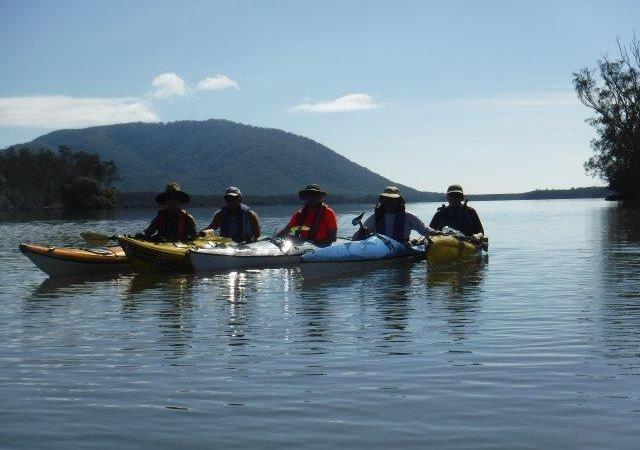
14 of us enjoyed a picturesque & tranquil paddle last Sunday which had a bit of everything starting with a beautiful 7 kms forest drive through soaring stands of timber to the wide expanses of Queens Lake & the more intimate environs of Bob’s & Limeburners Creeks which run off the lake.

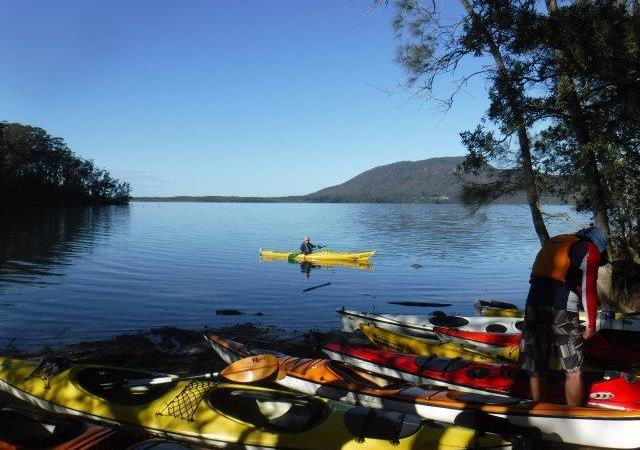
The drive into Queens Lake Nature Reserve along Bob’s Creek Rd. is one of the nicest rural roads you could find & along the way are very interesting historical signs detailing the history of the area with photos of original settlers, their homes & other interesting memorabilia. Every now & again clusters of tall, white trunks of ghost gums stood out from the shade of the forested areas. All the trees are ram rod straight & tall, an indicator of what the original timber in the area must have been like. Glimpses of Bob’s Creek could be seen through the lower vegetation with the sun illuminating the tanin coloured water. When we pulled into the reserve the lake in all its glory was an enticing sight through the trees along the shore. It was a clear, calm winter morning & the view across the lake from the little timber jetty was breathtaking, with North Brother perfectly reflected straight across the lake. After unloading & launching we paddled to our left up Bob’s Creek until stopped by timber blockages. Although just a short paddle it was beautiful & very atmospheric with tall trees surrounding us on either side & Mother Nature’s landscaping all around us.

Back out of the creek we paddled around the northern perimeter of the lake, past little rocky headlands, enjoying the vista all around us. While the other side of the lake is comparatively flat, heavily timbered banks with rocky sections climb steeply upwards on this side. We paddled across the openings of two small bays before entering Limeburners Creek which was lovely & easy to navigate. Last time we were there the water was covered with a dense carpet of casuarina leaves which made paddling almost impossible. We managed to get all the way up the creek, once again enjoying all the timber surrounding us, before heading back with the wide open spaces of the lake stretching out ahead of us with clouds & North Brother perfectly reflected in the dead calm water. All in all a very pleasant two hour paddle in perfect conditions.

Back at the reserve we enjoyed a picnic lunch looking across the lake which was even more calm than when we were paddling.

The area around Queens Lake was declared open to free settlers & up to the 1850’s it remained the southern outpost of Port Macquarie with industries such as lime burning, cedar cutting & bush grazing being the main activities. In the late 1800’s the area was settled by a number of pioneer families, some of whose descendants are still in the district. They made their livelihood from timber. Trees were felled & conveyed to Herons Creek wharf & taken by steam punts to Laurieton. Eventually land was cleared & agriculture commenced with maize being the main crop. Gradually farming & dairying began. I have attached a photo of one of the original houses belonging to the Latham family.

If you are interested, take a drive out here, check our the historical signs & also take a detour down Roseneath Rd. which leads to Herons Creek Winery & the creek.

Thanks everyone for joining us & we hope you enjoyed the morning.

Cheers
Caroline

This slideshow requires JavaScript.

Blog

Saltwater Creek & Lagoon at South West Rocks


No Comments

Well the rain held off long enough for Bill V, Bill & myself to enjoy a very special paddle last Sunday on Saltwater Creek & Lagoon at South West Rocks.

This unassuming little creek is accessed from the beach just below the surf club & is a real gem. It is one of 130 estuaries in NSW & is classed as an ICOLL (Intermittently Closed & Open Lake or Lagoon ). Estuaries like this ( & Killick Creek at Crescent Head ) form the foundation of the coastal food chain & provide important habitats for a variety of marine & terrestrial plants & animals. There are 24 naturally occurring vegetation communities in this area.

The water is a darkish colour as a result of tanin from the melaleuca & other trees growing along the creek, & sometimes in inundated areas. It contrasts with the pale sand & rocks of the beach at its opening. Dunes & rising, sometimes rocky terrain features on the eastern side of the creek with flat areas on the town side. Initial views up towards Arakoon & the hills disappear as the trees close in, only to open up again when you emerge into the lagoon with Hat Head National Park in the distance.

Back in the creek the melaleucas have to be the contortionists of the tree world. Twisted trunks with flaking bark &  buckled boughs reach out across the water like bleached skeletons. Tall feathery topped grasses swayed in the breeze, forming moving corridors while the more rigid grass of the saltgrass meadows formed a dense carpet in places. We paddled under three footbridges & easily manoeuvred our way through the  arbour, enjoying the reflections, the seclusion & the myriad shapes of the fallen trees…a gallery of timber sculptures. I spotted several azure kingfishers darting through the foliage as well as groups of ducks & a lone swan trying to keep ahead of us. As we emerged onto the lagoon, which was teeming with birdlife, we encountered at least 30 black swans. But my biggest thrill was sighting a cormorant rookery on one of the little islands. I almost missed it as their nests & the birds themselves were perfectly camouflaged in the maze of white, bare branches of drowned trees.
We spent about two hours paddling along the creek & around the lagoon, exploring all the little ponds & shallow areas. It is an oasis in what is a popular sea change township.

After our paddle we adjourned to a sunny table at an outdoor café on the main street & indulged in coffee & their all day breakfast.

Cheers
Caroline

This slideshow requires JavaScript.

Blog

Gumma


No Comments

Six of us enjoyed a few pleasant quiet days up at Gumma last week. While it is always lovely at this reserve, the campground has been spruced up & a new amenities block is due to be built.

George & Betty, Colin & Marion, Bill & myself & ‘Billie’ ( our little dog ) enjoyed warm days & cool nights with only a little rain.

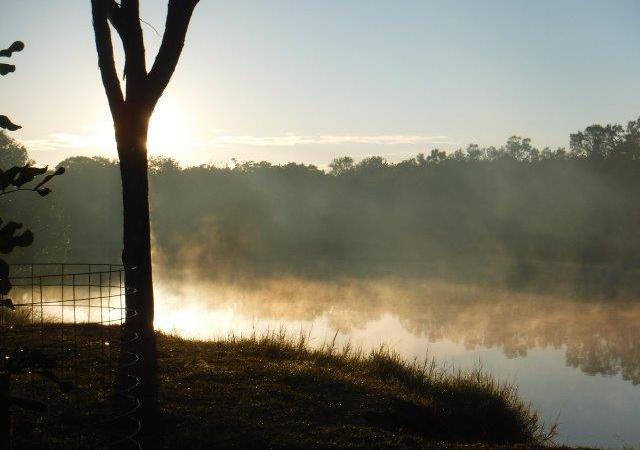
The mornings were crisp with light, ghostly water vapour rising up off the creek, highlighted by the morning sun. The days were balmy & blended seamlessly into cool evenings around the fire with a huge full moon rising up above the tree line casting a pale light   across the camp. As night descended on the campground, cloaking everything in shadows, the chilling cry of a solitary catbird, the lonely honking of swans, the shrill shrieks of plovers & the background hum of night insects provided nature’s soundtrack for the evening. During the night, the sound of the surf crashing in the distance across the creek echoed across the reserve. It was a quiet camp, not crowded & perfect for a relaxing few days.

We did some paddles close to Gumma itself which was good training for Billie who is still on her paddling ‘L’ plates, but showing all the signs of becoming a proficient paddling pooch!! It is picturesque paddling & brought back memories for George, Betty, Bill & myself of the first time we explored Warrell Creek many years ago now.  Both Bill & Colin paddled up past Scotts Head & Bill paddled down to the opening at Nambucca & found the landscape very different to what we have seen in the past. There is a largish bay now where we used to pull over onto the sand bank & the sand has also extended out & across from the other side. Bill also paddled up to the road bridge & was rewarded with the sighting of a huge osprey & a sea eagle. The wedge tailed eagle’s nest is still there, but Bill did not sight him. Bill & I & Billie paddled from Talarm up to Hells Gate which was beautiful, particularly right on the high tide. We then enjoyed a free hot shower & lunch at The Pub With No Beer at Taylors Arm. This is a quiet neck of the woods ( only the local dogs wandering around ) with a few classic old cottages.

Back at Gumma we were treated to the sight & sound of a group of about 12 black swans on the creek, as well as two smaller groups which did daily fly overs. They look so elegant gliding along.

Thanks to those who joined us; we trust it was an enjoyable break.

Cheers
Caroline

This slideshow requires JavaScript.

Blog

Stewarts River


No Comments

It’s a great feeling setting off on a ‘Sunday drive’ on a Saturday in the cool of the morning with the promise of a lovely paddle awaiting you at journey’s end. Last Saturday was one of those mornings with a pleasant drive down to Johns River complete with George Thorogood & the Destroyers pumping out their classic blues/rock on the CD while the early sunlight was rolling out gently, gradually enveloping  the passing rural landscape in a soft light ( I passed Bad Billy around Kew; he biked it down also enjoying the cool early morning ).  Turning into Wharf Rd. at Johns River you get off the beaten track & a lovely avenue of pine trees ushers you to the banks of the Stewarts River. The air was cool, the light subdued amongst the trees & the water looked secretive & inviting through the vegetation. Stewarts River feels hidden as you have to be on it or alongside it to know it is there. While access is awkard it is well worth the effort as the river is a secluded stretch of water which meanders gently for approx. 5 kms through rural land before flowing into Watson Taylor Lake which opens up before you in all its  panoramic splendour.

At the start of the paddle we headed up towards the railway bridge, a more narrow section with trees leaning across the water & azure kingfishers darting through the bushes. David spotted several together which is unusual as we are lucky to see just one or two individually on most paddles. Dappled sunlight created pools of light on the surface & enhanced the Impressionist like reflections of the trees. Due to the lower level of water up here there was a bit of a swampy smell, but this disappeared once we moved off downstream. There were plenty of fish jumping around & birdsong up in the tree tops. Along the way, nestled amongst trees right on the riverfront was a house that looked like the perfect artist/writers retreat, complete with verandah for morning coffee & an evening wine. It is a visually relaxing & soul cleansing paddle.  Beautiful stands of tall timber are all around, corridor like in some parts, & the occasional fallen tree limbs & graceful tall white trunks added to the overall landscaping effect. It was easy to fall into a steady rhythm which felt in tune with the surrounds. All things considered it is a classic paddle that ticks all the boxes.

Before long Watson Taylor Lake opened up before us with North Brother in the distance. It was absolutely breath taking with water like glass stretching back towards Dunbogan. We all took a moment to just take in the vista ( & a photo opportunity!! ) before drifting out onto the lake itself. We paddled around to our right past Washtub Bay, which was too shallow to navigate,  on to Bensons Inlet, where I spotted a huge Osprey up in the trees, & on to a little sandy beach where we stretched our legs & enjoyed views back across the lake. We then paddled across to & around a small island before heading back up the river & enjoying the river views in reverse. After loading up we had lunch at the little park in Johns River.

Thanks Greg for leading this paddle & to David, Stephen & Bill V for joining us.
The Stewarts River is described as a perennial stream which rises on the northern slopes of Big Nellie within the Coorabakh NP west of Hannam Vale, flowing east by south & then east being joined by the Camden Haven River before reaching its mouth at Watson Taylor Lake. It descends 132m over its 62kms course.

Cheers
Caroline

This slideshow requires JavaScript.

Blog

Wilson River


No Comments

Hi everyone,

Seven of us enjoyed perfect conditions on our Wilson River paddle last Sunday. The water was smooth as satin & a slightly overcast sky shed a different light on the riverscape, creating a different mood. This is a paddle where it does not have to be bright sunlight for it to be beautiful. A dull light seems to enhance the different hues of green & what some might pass off as ordinary becomes extraordinary by virtue of the light & shade, texture & composition.
There are some beautiful scenic stretches along the river’s course, ranging from the tall, vertical white trunks of the river gums which seem to march up the slopes, masses of cascading vines adorning some trees, grassy islands dotted here & there to the backdrop of darker green hills which seem to wrap around the river.

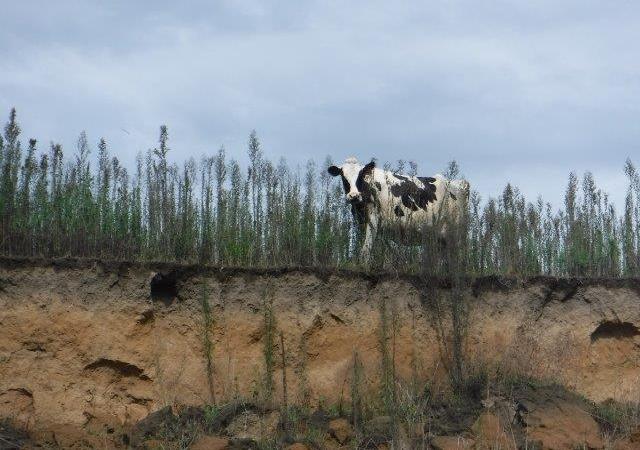
With a good run in tide we had no trouble negotiating the shallows above the cluster of little grassy outcrops round about the half way mark. This is such a pretty part of the river & it was nice to just be able to soak it all up without scouting around all the time for rocks beneath the kayaks! I was surprised how overgrown our regular morning tea/swimming spot has become with most of the river rocks at the water’s edge camouflaged by grasses & weeds. While most got out for a leg stretch, Stephen, Bill V & myself pushed on through a few obstacles & were rewarded with the call of bellbirds, cows that looked like they had been painted into the landscape & some lovely reflections. It feels wonderfully remote up here & as Stephen commented it is these extra experiences that make it all so worthwhile. I spotted some delicate little waterlily flowers nestling atop giant lily pads; they had fringed edges, almost like some orchids. Our paddle back to Tele Point was just as enjoyable with the sound of birdsong up in the trees, a light breeze & sunlight throwing a spotlight on the white tree trunks. Bill W was waiting for us, enjoying a cup of coffee & the weekend papers after paddling up from Riverside. The day had warmed up & we had lunch under the picnic shelter.

Thanks Stephen for leading this paddle.

A little bit of information on the Wilson River & Telegraph Point for those who are interested.

The Wilson River rises on the south east slopes of Mount Banda Banda in Willi Willi National Park flowing south east to its confluence with the Maria River near Telegraph Point. It is 69 kms long & descends 559m. It is named after Lieutenant W.E.B Wilson, engineer & inspector of works with the first settlement in Port Macquarie. Telegraph Point gets its name from the telegraph line which crossed the river in 1869. The river played an important role in the logging of the surrounding forest & there are the remains of several old wharves, the most well know being Log Wharf after which the reserve is named. The first land grants issued in the area (the region was formerly known as ‘Prospect’ ) were in 1832. The present day bridge over the Wilson & above the reserve at Telegraph Point replaced an old single lane timber bridge. There also used to be a railway station at Tele Point but it was closed in February 1983.

Cheers
Caroline

This slideshow requires JavaScript.