
Hi everyone,
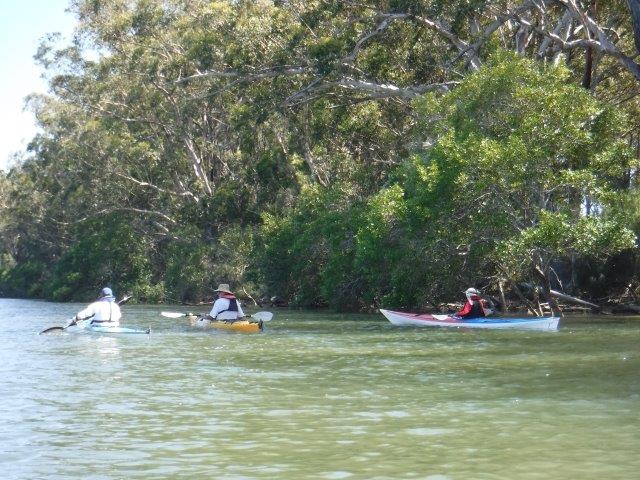
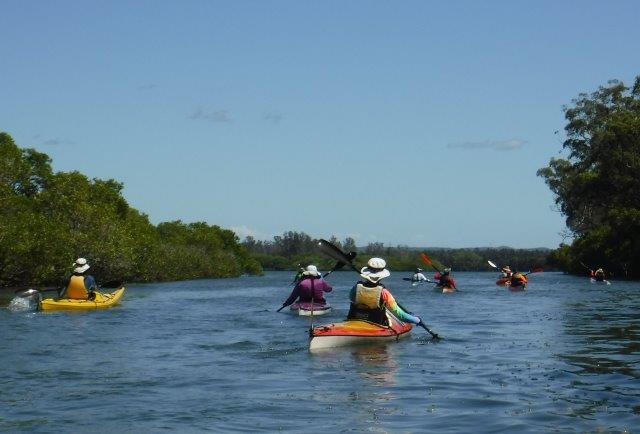
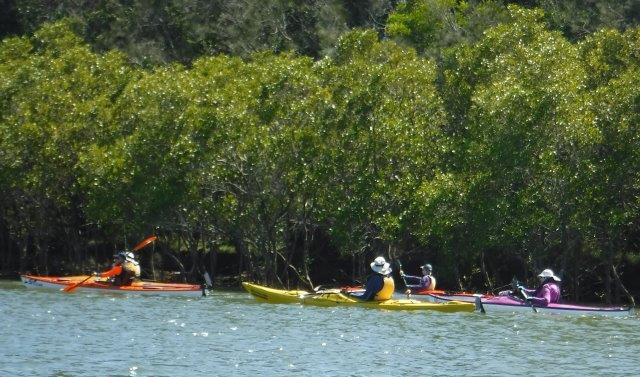
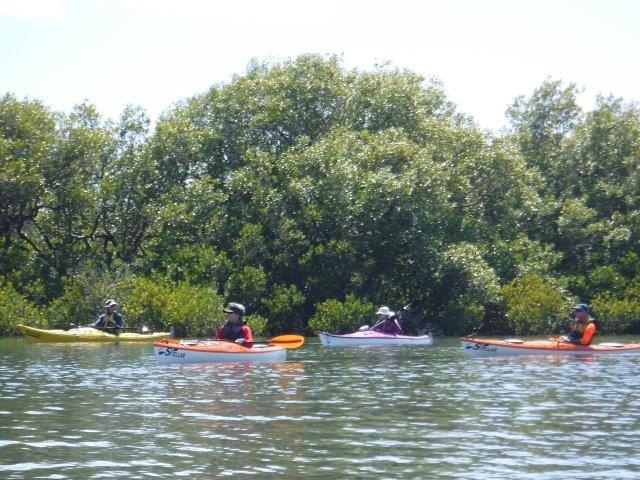
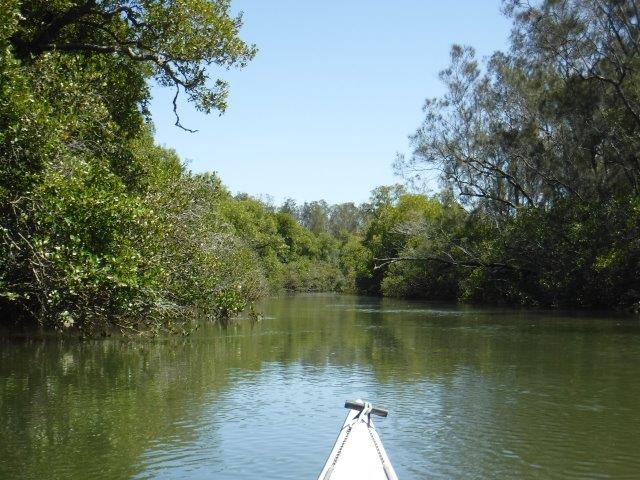
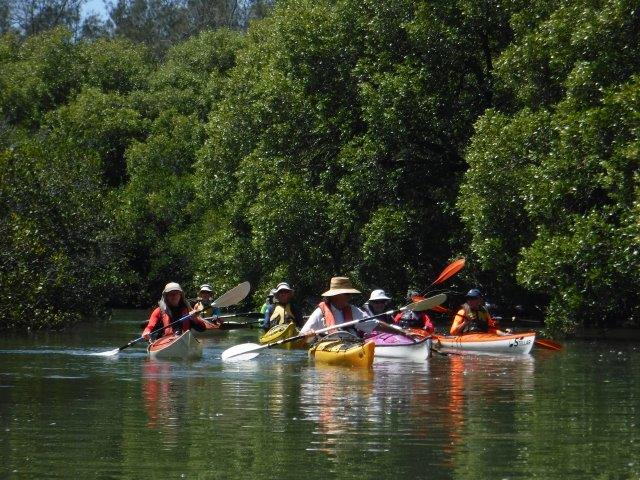
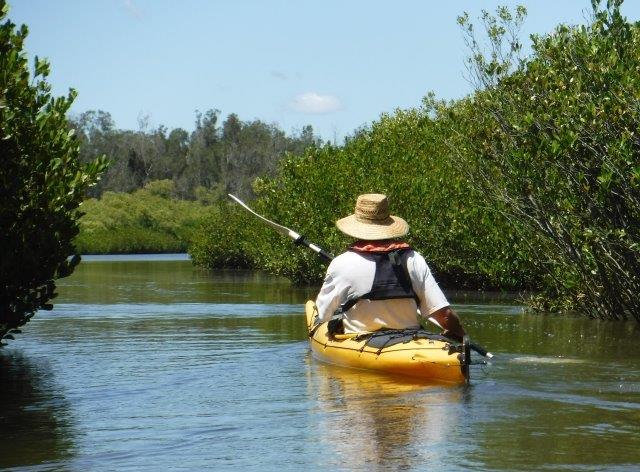
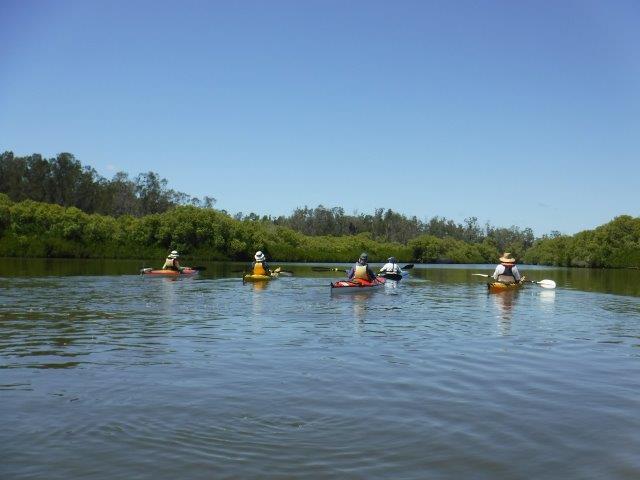
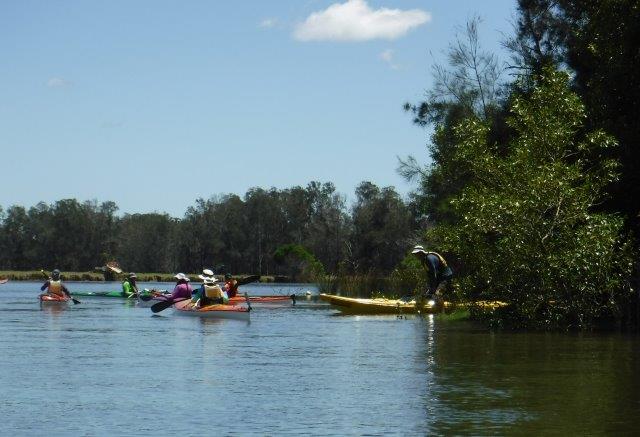
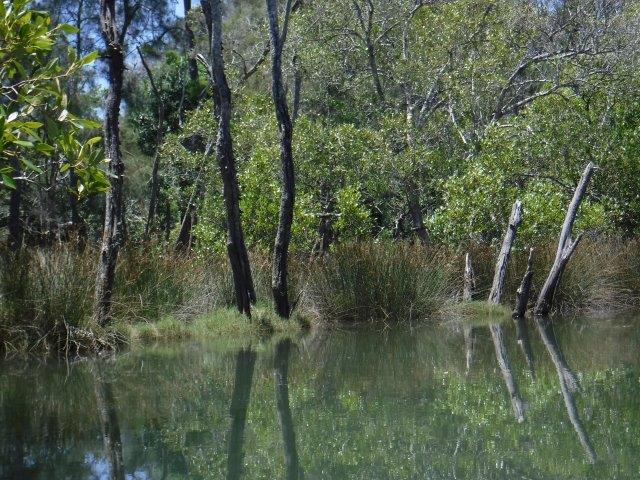
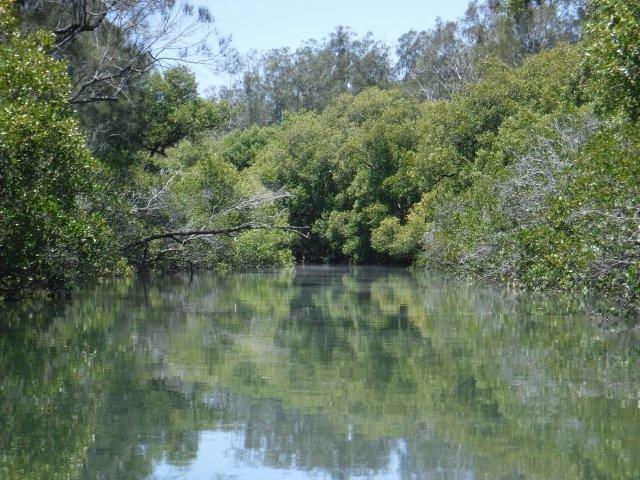
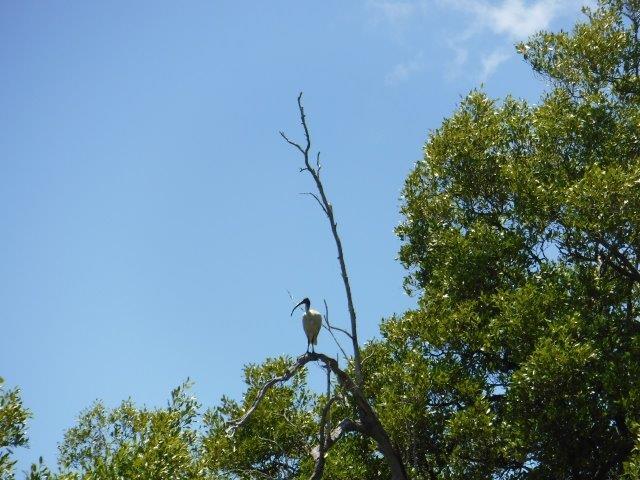
Ten of us – Bruce & Jane, Leon & Kate, Barry & Maree, Ken, Colin, Julie Ho, Bill & myself enjoyed a pleasant (approx.. 15 kms) paddle up the Maria River last Sunday. We set out accompanied by dolphins; it is always heart-warming to watch their lithe, slick bodies arc smoothly out of the water within metres of your kayak. The weather was fine & we needed the welcome NE wind as it got warm quite quickly. We crossed the river & paddled up the back channel where I spotted a huge sea eagle gliding just above the tree line. We then crossed over into one of the lagoons before heading up to the anabranch between Boomerang Island and the mainland where a large mangrove has come down. We then paddled up & into the lovely top lagoon before pulling over for a morning tea/rest break. Bill & Ken elected to paddle on to Big Log & caught up with us as we finished our break & headed back to Blackmans Point. Thanks everyone for joining us & to Bill for leading.
Blackmans Point has a troubled legacy. Although the three standing stones and plaque at the junction of the Hastings & Maria Rivers acknowledge the three rivers clans of the Birpai as the traditional custodians of the Hastings, Wilson-Maria & Camden Haven Rivers & all the lands in between, there is no history of the site itself. According to traditional oral/word of mouth Birpai history, and a written reference by a white settler, a massacre of Aboriginal people allegedly took place here in 1826. A short documentary film entitled “Blackmans Point Massacre” premiered in April 2021 during Port Macquarie’s Bicentennial celebrations. It featured interviews with Birpai people & P:rofessor Lyndall Ryan, the creator of the Colonial Frontier Massacre Map Project . While this alleged massacre is not yet included in the formal map, Professor Ryan is working with the Birpai people to collate more written ‘documented’ evidence such as the account from the book written by Henry Lewis Wilson (1817-1895) which outlined a bloody confrontation at Blackmans Point (The Early Days of Port Macquarie, published in 1889).
As you paddle along enjoying the riverscape, you never know (unless you are a local) what lies behind the tree line along the banks. Parts of the Maria River run parallel with the Maria River Rd. which is bounded in sections by the Maria River National Park. It is also home to tea tree plantations and a gin distillery!!
The first plantation in the Maria River Plantation Group was established in 1994. Since then more have been established and there are five between Port Macquarie & Lismore. The plantations have an agricultural base of livestock with the key focus being on the production, research & development of various essential oils for wholesale distribution for application in the personal health and animal care industries. There are approx. 600 ha of tea tree plantations & the Group believes it is currently the single largest producing plantation in the world. The various sites are the Maria River Plantation, Limeburners Plantation, Heritage Farms & a site at Woodburn. The combined tea tree oil production of the sites is estimated to range between 70,000kgs to 100,000 kgs per annum, depending on the season. They also produce 1,000 kgs of lemon scented tea tree. The Heritage Farms Plantation is only 500 metres from the Settlement Point Ferry, just before you drive over the Limeburners Creek bridge.
And now, the gin distillery. According to the distillery, when it first got its licence it was one of only seven distilleries in NSW fermenting its own alcohol. This allows them to individualise their product. They produce Dry Gin and Botanical Gin. The latter requires a blending of two to three batches of Maria River Distillery (MRD) Botanical Gin to improve the flavour consistency. The botanicals are added in the final distillation process via vapour infusion. The Dry Gin has 5-6 ingredients while the Botanical Gin has 22, a lot of which are grown on the farm which also has a vineyard. In another interesting twist, alcohol is fermented from sugar and the first sugar cane planted in Australia was in Port Macquarie. It is thought the first stills were in the area around where the Hibbard ferry is now located!! Apparently the first Verdelhos were planted in Port Macquarie.
Information courtesy of North Shore Progress Association October & November 2022 newsletters & Maria River Plantation Group fact sheet.
Cheers
Caroline



 Port Macquarie Hastings Canoe Club