canoe

Blog

Little Rawdon Island from Blackmans Point


No Comments

Hi everyone,


How welcome is that lovely rain!!! Hard to believe that things had become so dry when you think back to the floods earlier in the year.


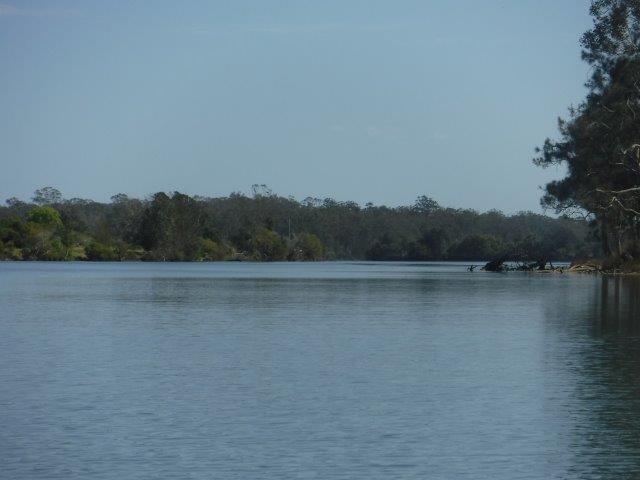
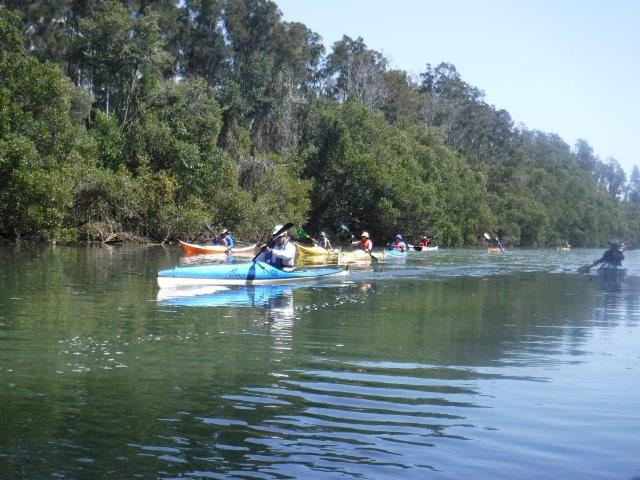
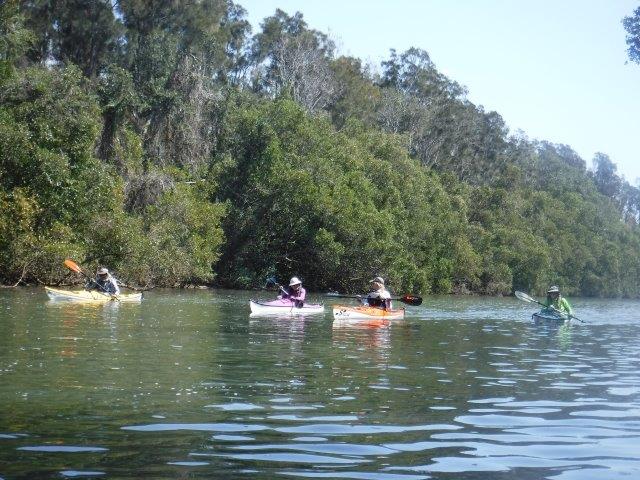
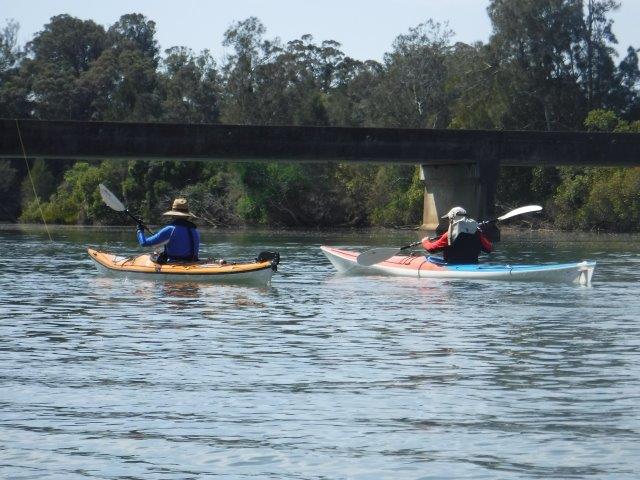
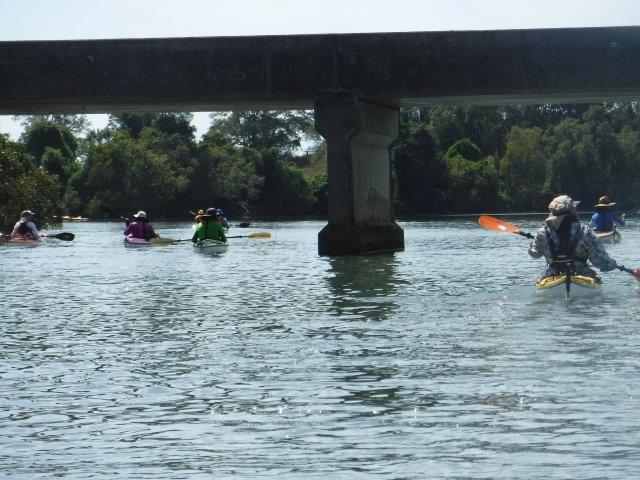
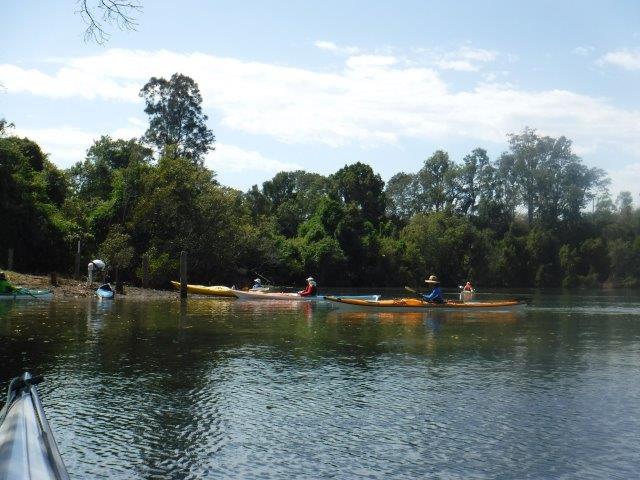
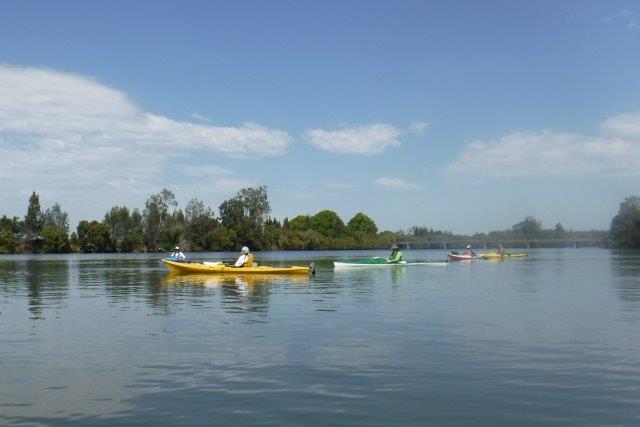
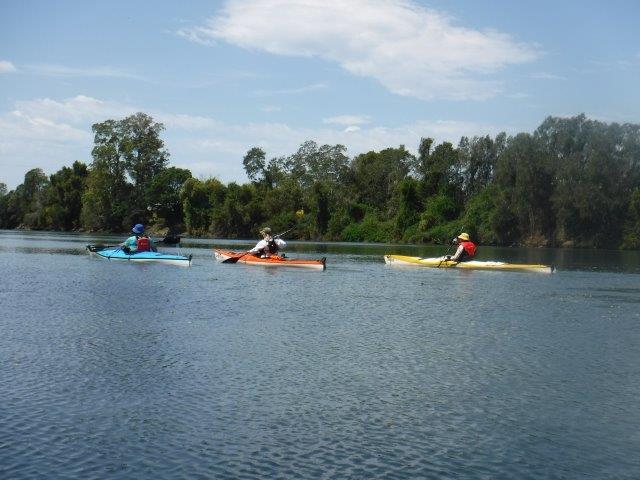
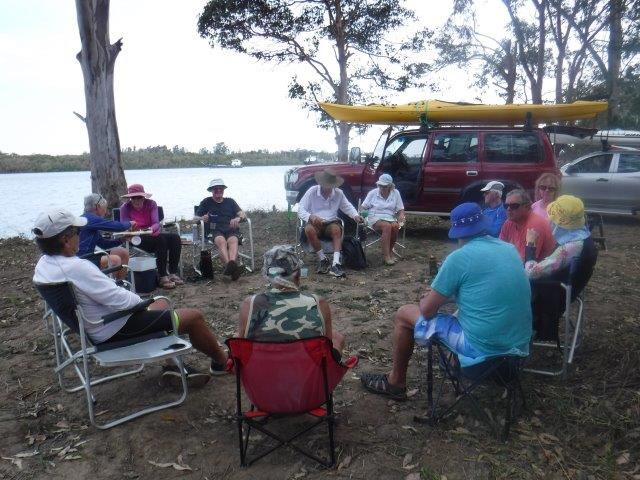
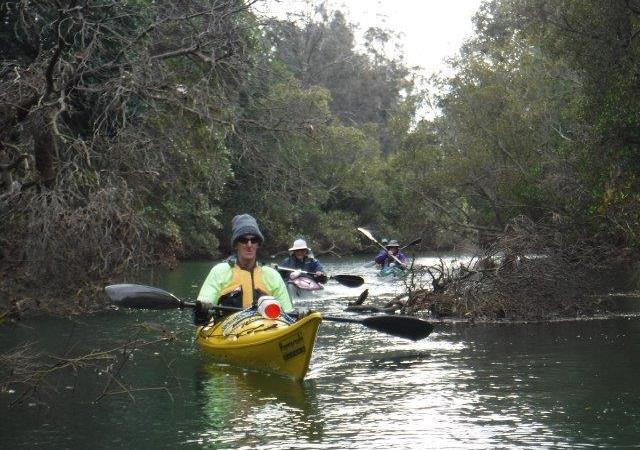
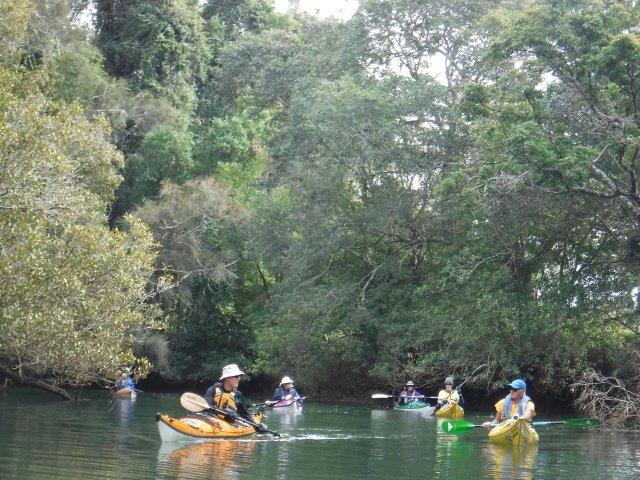
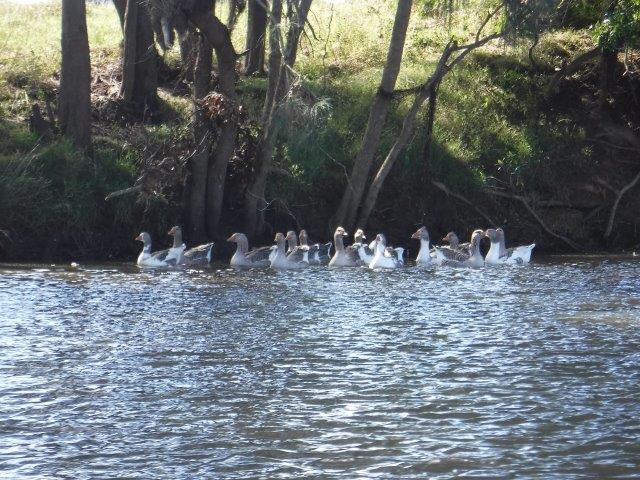
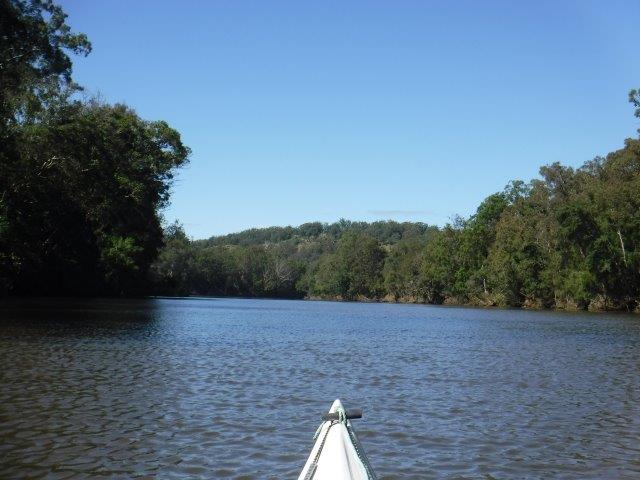
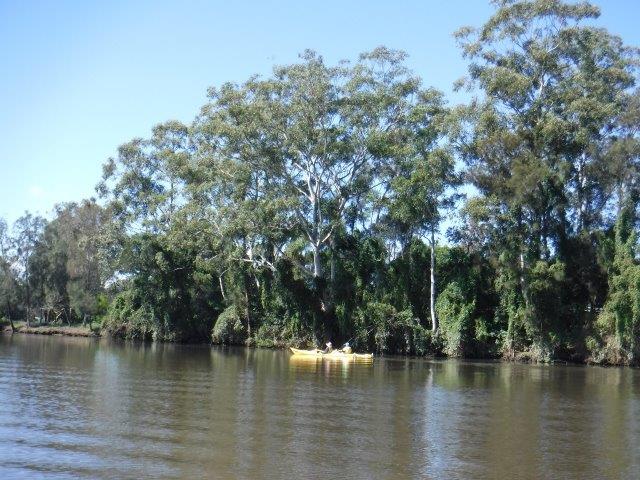
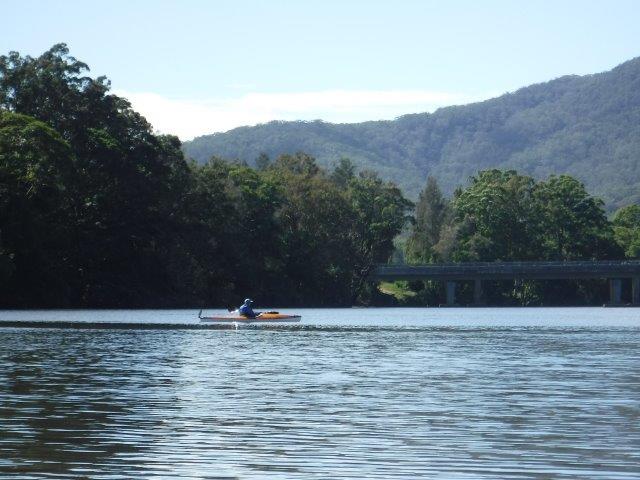
We had 15 starters for our Sunday paddle around Little Rawdon Island from Blackmans Point. The day was warming up by the time we hit the water and it was a welcome relief to feel the wind when it got up on our way back. Luckily it was not strong ( as we have experienced it up in this area of the river ) but it was cooling.


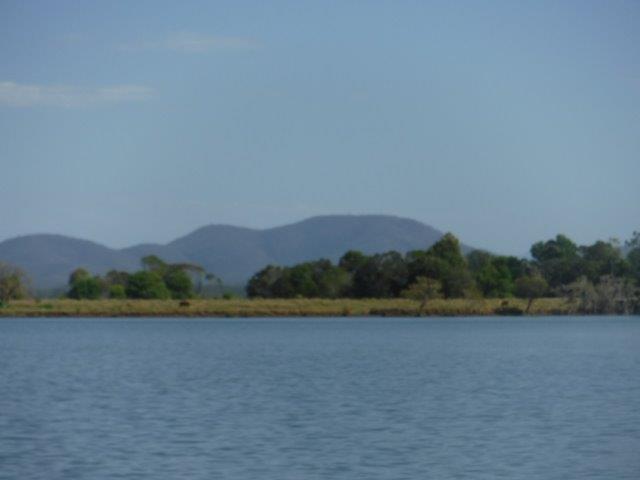
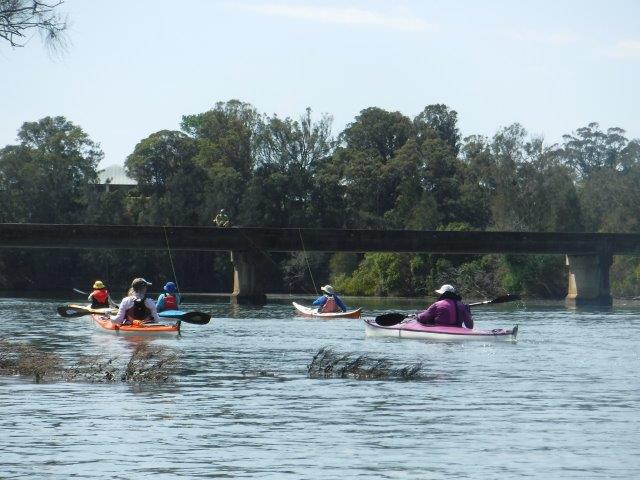
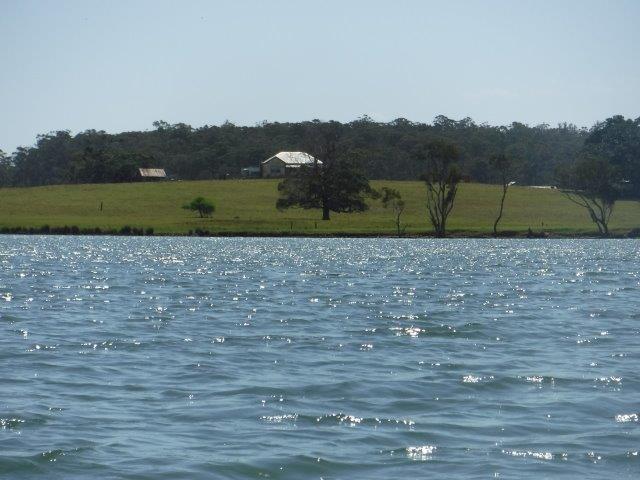
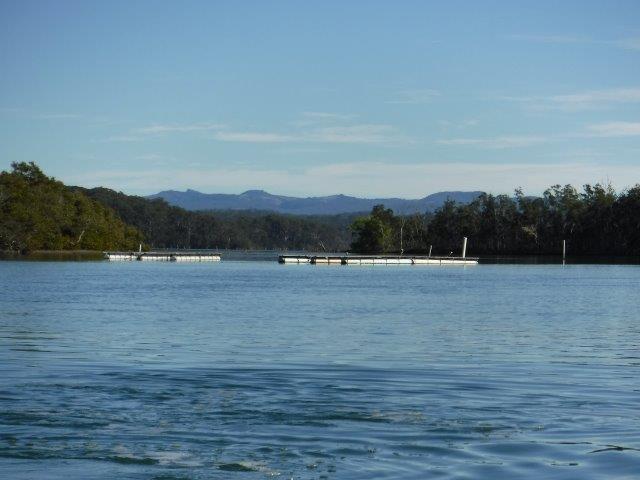
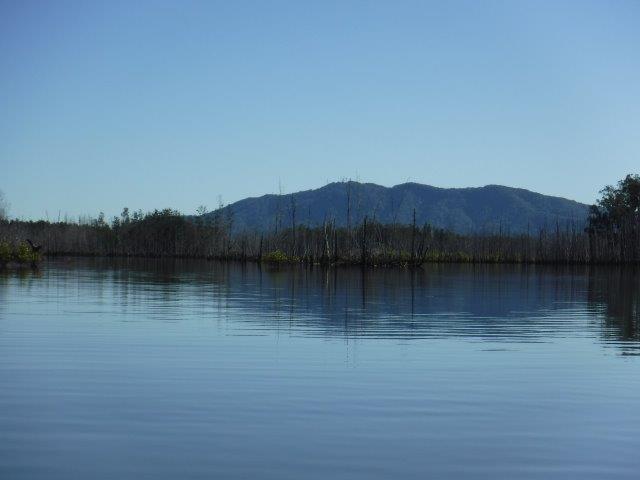
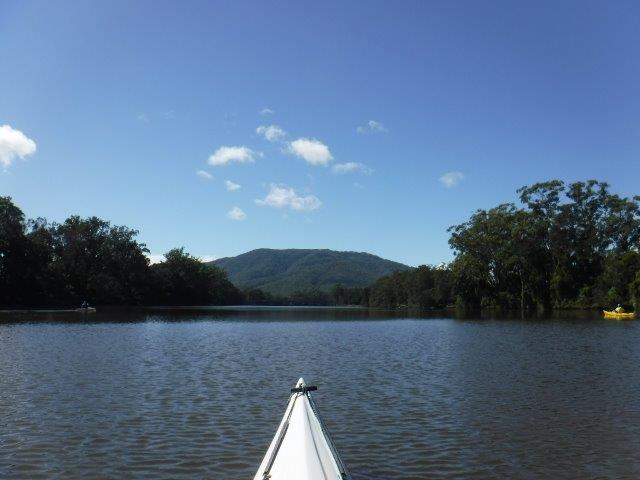
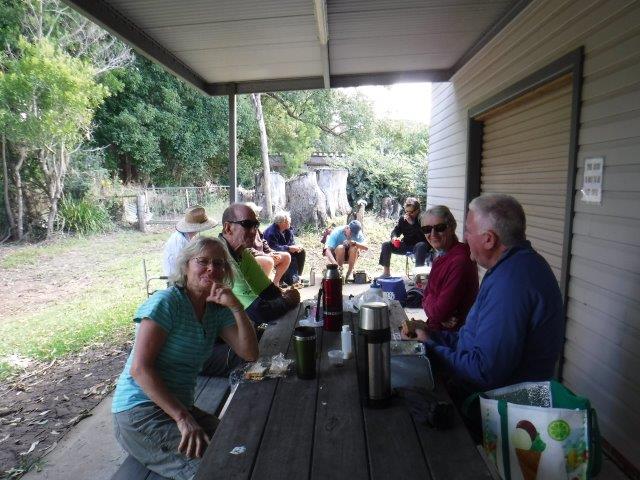
There are always some lovely vistas to enjoy on this paddle; wide expanses of river with the distant hills as a backdrop, in particular Mt. Cairncross ( see photo ), the occasional old farmhouse making for a picturesque rural scene along with glimpses of farming land behind corridors of trees. One of my favourite scenes is that of the ” lone angler” fishing from Little Rawdon Island Bridge.  There always seems to be someone casting a line or two from the bridge when we do this paddle. We enjoyed a pleasant paddle, with a brief stop at the old ramp on the Galloway’s property on Little Rawdon Isl. The wind started to get up on the return paddle but was not a problem; it was actually cooling on what turned out to be a hot day. Back at McMillan Drive we enjoyed a picnic lunch topped off with a beautiful cake baked by Kate to acknowledge Leon’s recent birthday.


On May 12, 1819 while conducting a survey of the Hastings River (Dhoongang), Lieutenant King and Surveyor-General John Oxley landed on Little Rawdon Island where King recorded they had lovely views of a round topped hill (Mt. Cairncross) which was a dominant feature on the western skyline. The Aboriginal name for the  mountain is said to be COOLAPATAMBA or COULAHPATAMBAH, translated as ‘a place where eagles drink’. It is often referred to as the ‘sleeping elephant’ due to its shape. (Info. From the Elephant Trail Race and Manning River Times). Where the name Cairncross came from is the subject of conjecture.


The European names of Rawdon Island ( & Little Rawdon Island) refer to Francis Rawdon Hastings, the first Marquis/Marquess of Hastings. He was an Anglo-Irish politician and military officer, Governor-General of India between 1813 and 1823 and served with the British forces during the American Revolutionary War. He took the additional surname of Hastings in 1790 in compliance with the will of his maternal uncle, Francis Hastings, the 10th Earl of Huntingdon. (A marquis is described as a member of the British peerage ranking below a duke and above an earl).


Both Rawdon & Little Rawdon Islands have always been farming communities. The first school on Rawdon Isl. was opened in 1876 and remained open for 100 years, closing in 1976. The lovely old building is now a function centre. Rawdon Island also boasted a football club. Rugby union was first played in the Hastings area from 1891 until 1920 when the code changed to Rugby League. In 1931 the team from Rawdon Island won the 2nd grade competition, beating the Port Macquarie B team. Between 1928 -32, three grades made up the Hastings District Rugby League. Teams from Hamilton, Byabarra, Long Flat, Telegraph Point and Rawdon Island competed against the stronger Wauchope, Beechwood and Port Macquarie clubs. In 1933 the league carried a motion that ended lower grade competitions leaving only 6 teams to contest the 1st grade. At this point the Rawdon Island footy team disbanded (Port Macquarie Historical Society records).


Blackmans Point (GOOLAWAHL) also has history. The European name is thought to relate to one James Blackman who travelled with John Oxley on his journey to Port Macquarie in 1818. The ferry that used to operate from here across the Hastings to the Fernbank Creek ramp was the vehicular transport point between Port Macquarie and areas to the north prior to the opening of the Denis Bridge in 1961.

 On a darker, sadder note, as a part of events commemorating Port Macquarie’s bicentenary earlier this year, a short documentary entitled “Blackmans Point Massacre” premiered. This film explored, through interviews, the story passed down through generations of Aboriginal oral tradition, of a massacre said to have taken place here in 1826. A plaque acknowledging Country, erected at Blackmans Point by the Port Macquarie-Hastings Council, makes no mention of the massacre. Professor Lyndall Ryan, who created the Colonial Frontier Massacre Map Project, is working with the Birpai people to collate more ‘western’ proof of a massacre. A written account of a bloody confrontation at Blackmans Point is recorded in the journal of one Henry Lewis Wilson. The Blackmans Point massacre is not yet included in the formal map and uncertainty remains about the number of people killed.  NITV’s The Point program, from which this information is sourced, also reported  that the Port Macquarie-Hastings Council was consulting with and taking direction from Birpai traditional owners on how to formally acknowledge the massacre. (The Point 8 June 2021 & SBS ) Hope this information is of interest.


Cheers
Caroline
Blog

Haydons Creek to Sancrox


No Comments

Hi everyone,


Hope everyone is doing ok with the state wide lockdown. Shame about our scheduled paddle last Sunday but let’s hope the situation improves soon and we can get back on the water together as a group in the not too distant future.
This report is on the last paddle we did on Haydons Creek, a lovely deviation off the Hastings on the way to Sancrox.
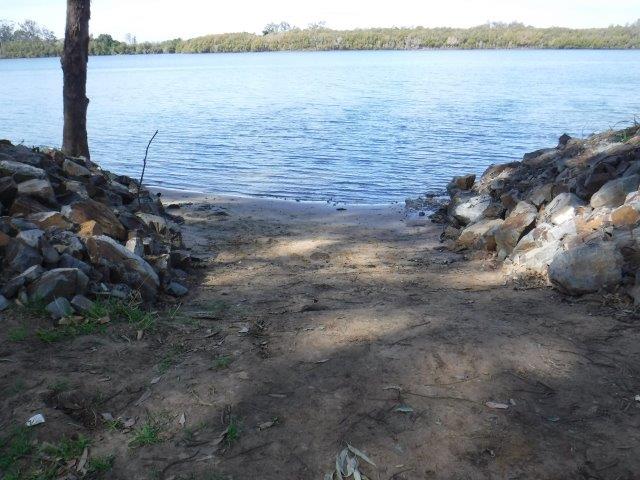
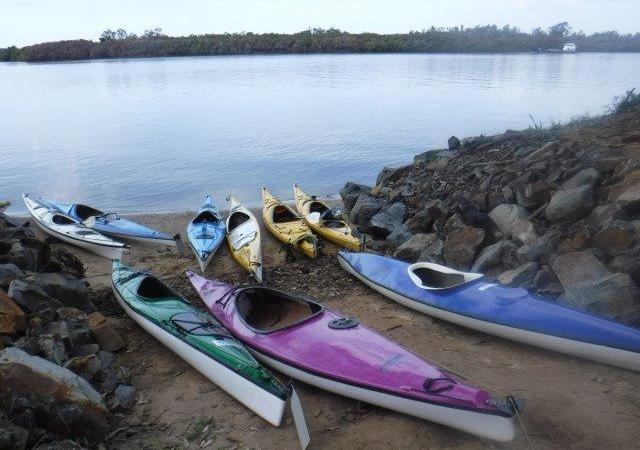
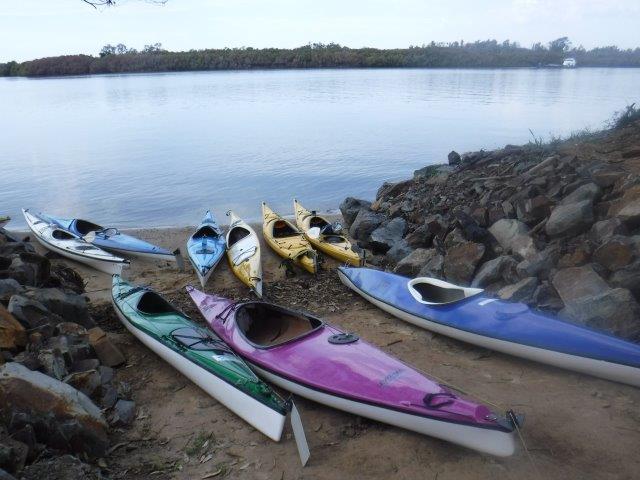
When we arrived at the paddock at the end of McMillan Drive, Blackmans Point we were pleasantly surprised to see that the area had been cleared (presumably to remove flood debris) and a better access ramp into the river created which makes launching much easier and safer.


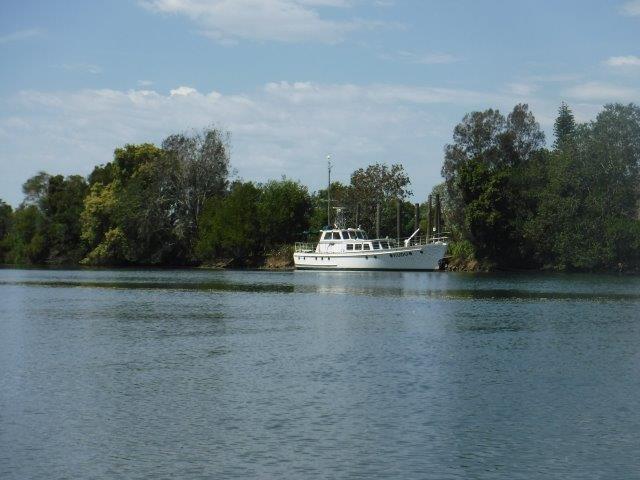
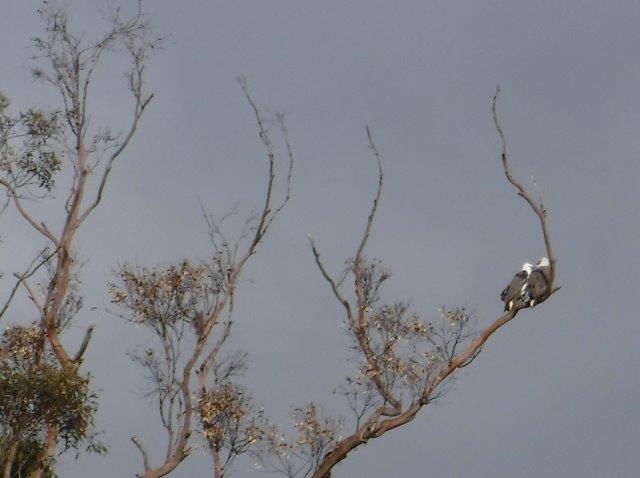
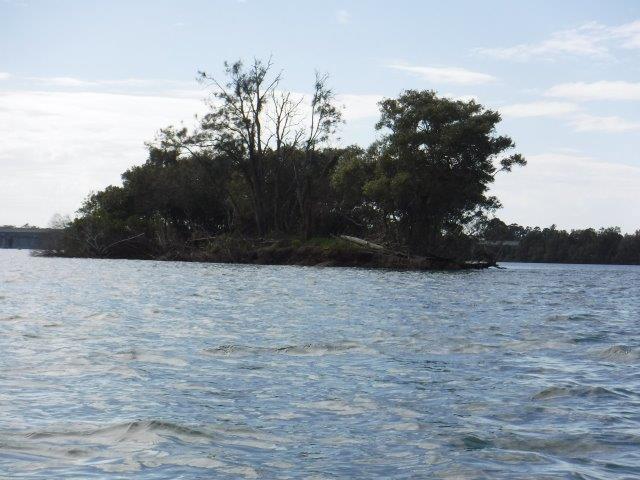
We paddled across the river, checked out what boats were at Birdons & then paddled up river, under the two bridges towards Sancrox enjoying the scenic panorama up towards Comboyne. The island just past the new bridge seems to have shrunk since the floods. Being right in the main flow of the river it would have been subject to a lot of pressure from the onslaught of the floodwaters. A beautiful sight along the way was two majestic white bellied sea eagles sitting side by side on a branch overhanging the water. I have never seen two sitting so close; usually they commandeer their own branch!!
When we turned into Haydons Creek we saw that the little white wharf just inside the creek had also fallen victim to the floods, but some repair work is underway here also.


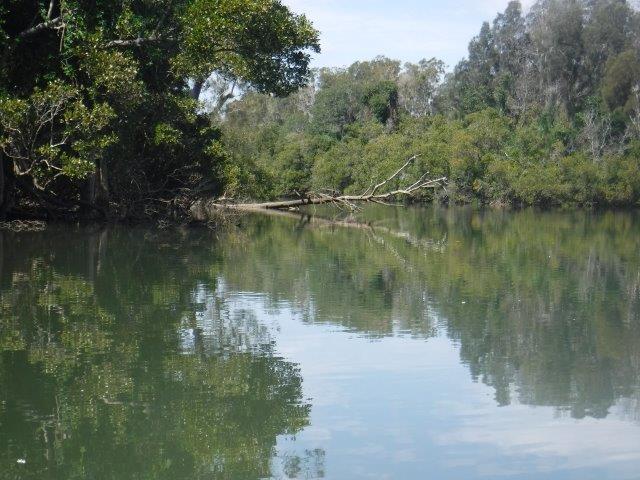
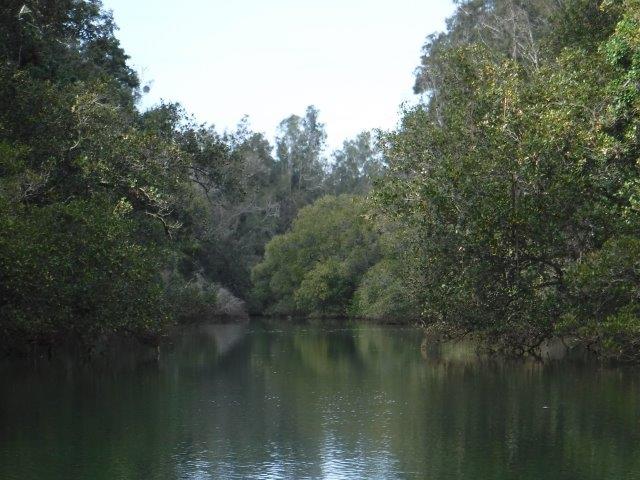
Haydons Creek was just as peaceful and picturesque as usual; so quiet and secluded after the wide open expanses of the main river. Birds were singing In the trees and it was so pleasant just meandering along. We seemed to get a fair way up the creek…..further than on previous paddles.


After enjoying the creek we paddled back out on to the main river & back downstream for a bit of lunch back at the cars.
I have not been able to find much historical background on Haydons Creek. It rises near Sancrox and runs for about 5kms before joining the Hastings River. I could not find any information on who it is named after, but a possibility could be ‘Big’ Bill Haydon, often referred to as the Cedar King, a legend of the timber industry on the North Coast in the early 1900’s. Other places in the district have the Haydon name. Material I accessed described Haydon as the classic Australian self-made man. He left home at 15 years of age with two shillings and two years later purchased the first of fifty bullock teams, becoming the youngest person known to own such a team. He went on to construct 10 sawmills in the Camden Haven, Hastings & Macleay districts.


Bill Haydon disappeared in the Willowie Scrub in North Washpool (Washpool National Park) in 1965. His body was never found. A plaque at the big cedars (trees over 1000 years old) on the Washpool Walk record his story.
Hope our eight paddlers enjoyed this outing which is approx.. 12 kms return.


Cheers
Caroline
Blog

Stingray Creek to Queens Lake


No Comments

Hi everyone,


Fifteen of us enjoyed another cool but beautiful morning on the water last Sunday.
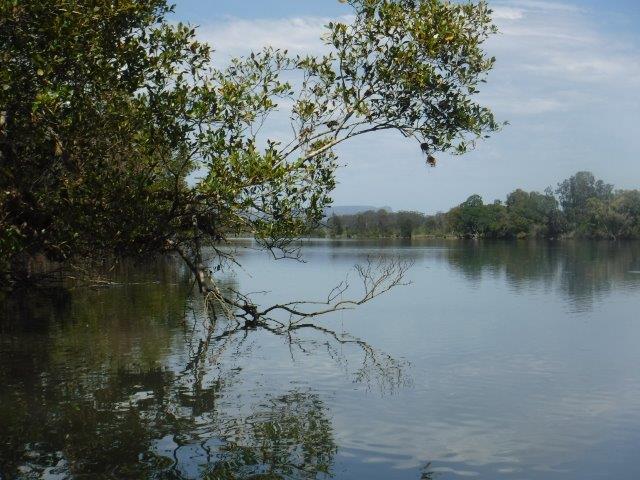
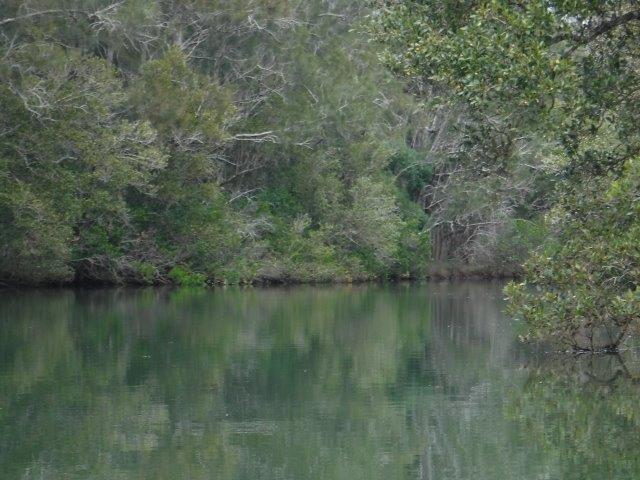
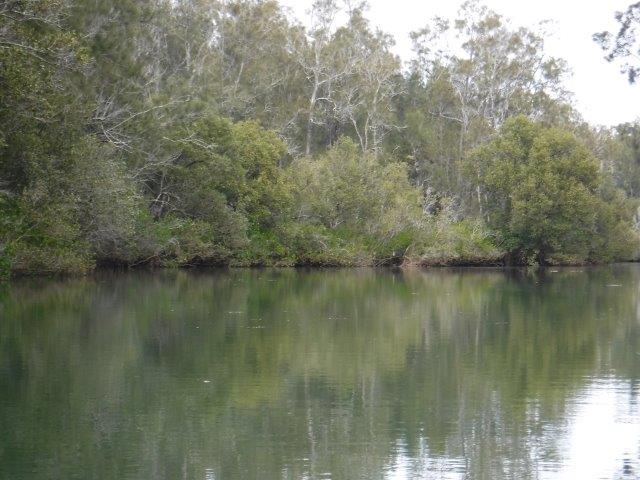
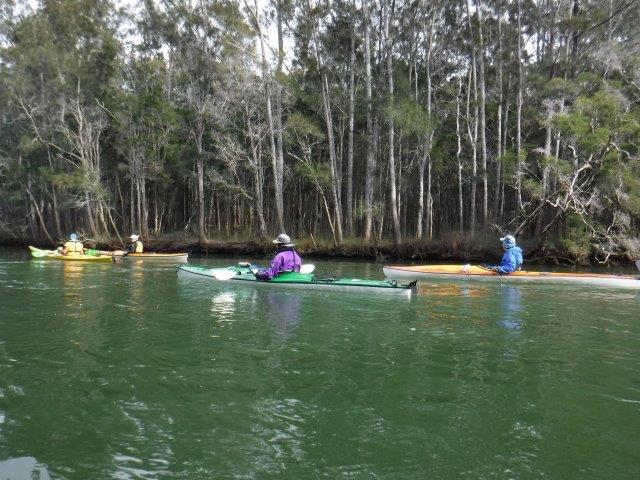
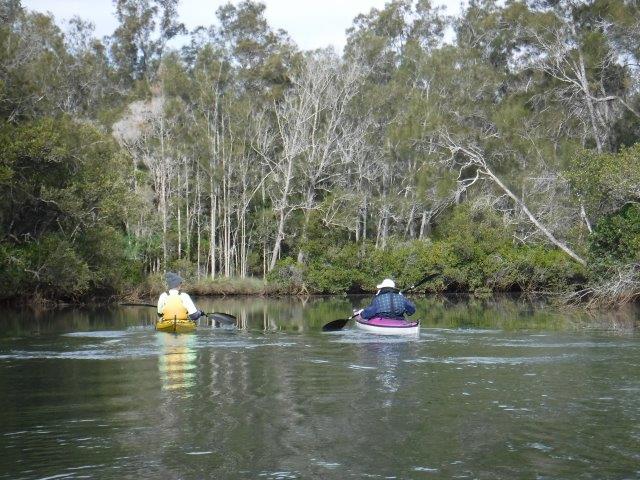
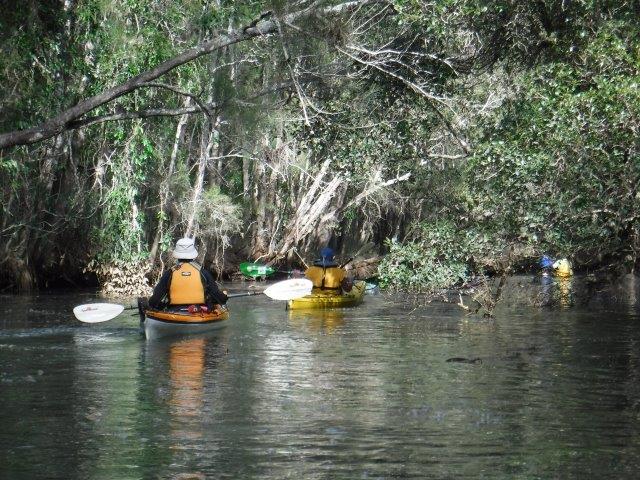
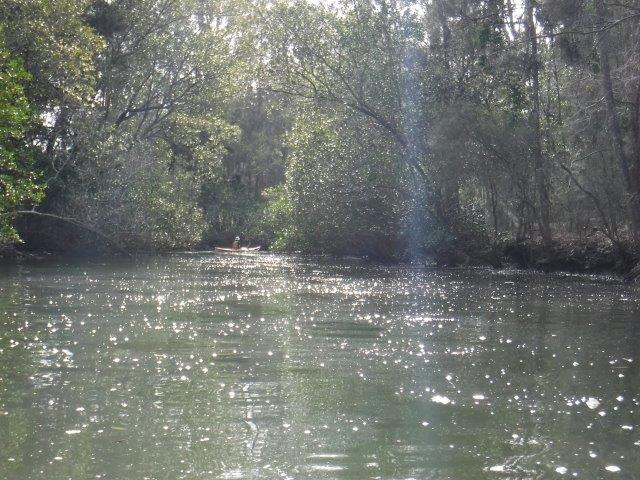
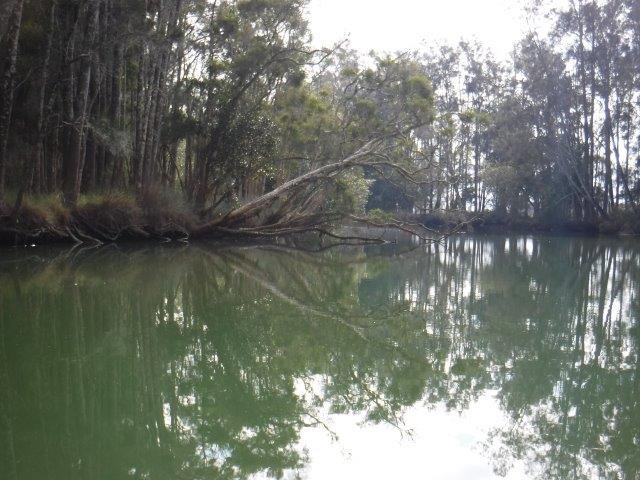
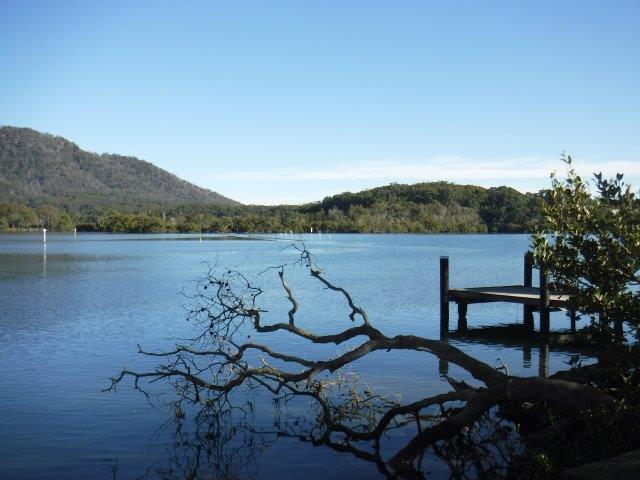
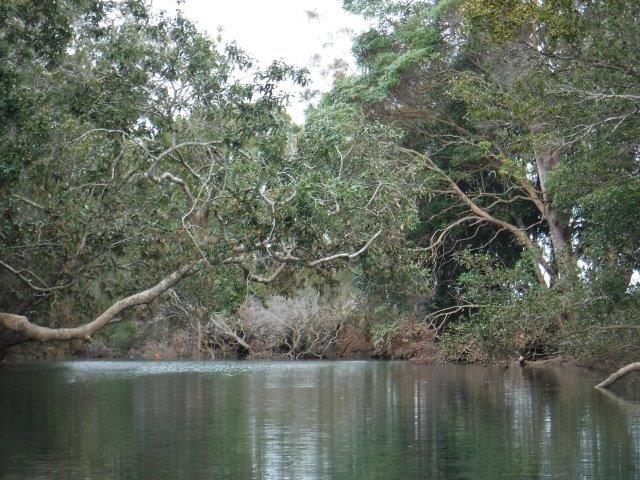
Greg led us on a paddle around Stingray Creek down to Queens Lake. We had good water & not too many tinnies which was a blessing given it was a long weekend. This is a lovely, relaxing paddle and we meandered through side lagoons and along the creek towards the lake and the large inlet just before the lake. Surrounded by hills, this is a protected paddle and feels like a little world all to itself with lovely old mangroves here and there, glimpses of houses through the trees and wading birds in the shallows.
At the launching spot I was interested to see a sign for the Cod Grounds Marine Park. I had not heard of this before and it has an interesting story.


The Cod Grounds Commonwealth Marine Reserve was established in 2007. It is approximately 5.5kms offshore from the Camden Haven, covers four square kms with depths ranging from 21 to 46 metres. It is one of eight parks managed under the Temperate East Marine Parks Network. The primary reason for its establishment was to protect a significant aggregation site for the critically endangered East coast population of the grey nurse shark. It is also a biologically important area for the protected humpback whale, vulnerable white shark and a number of migratory seabirds. In 2017 it’s status changed to a Marine Park and it is wholly zoned as a national park. (Wikipedia) The Stingray Creek bridge has a history too. The original crossing from North Haven to Laurieton was made via a ‘pack-horse’ punt which was pulled across by hand. It was said to have been installed by teamsters who hauled logs from Green Hills ( now Bonny Hills) to Limeburners Creek for transportation by the old log punt to Longworth’s Mill in Laurieton. When disaster struck and the old punt sank, for three years all supplies etc had to be rowed across in a boat to Laurieton. The first bridge was opened officially in 1931. It was  a one way wooden bridge referred to as the Humpty Back bridge. The next bridge, which replaced the Humpty Back bridge, was opened in 1961 followed by the current bridge which came into being in 2017. (Camden Haven Courier).


Thanks Greg for leading this paddle.


Cheers
Caroline
Blog

Yarrahappinni Wetlands


No Comments


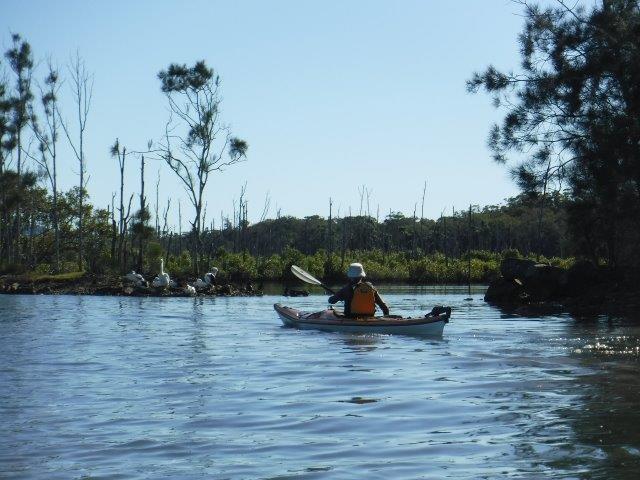
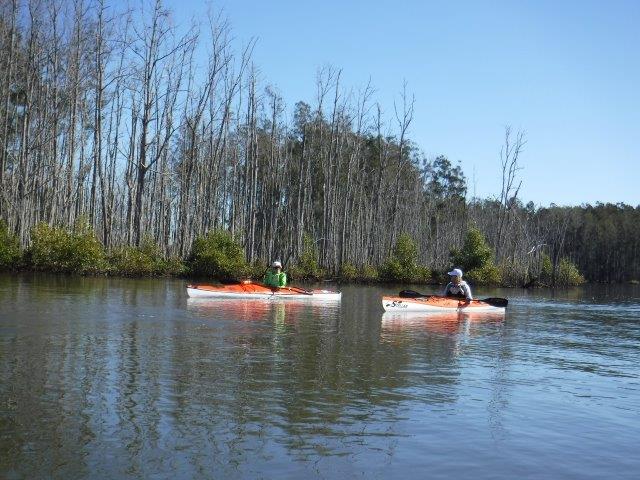
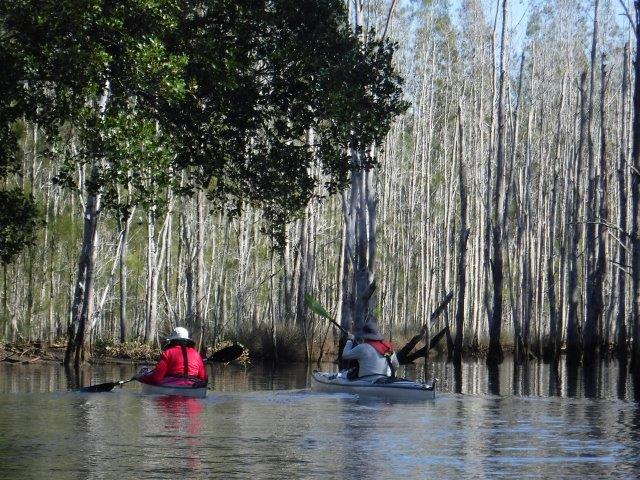
Twelve of us enjoyed perfect conditions for our paddle last Sunday in the Yarrahapinni Wetlands which are a part of what is collectively known as the Clybucca Historic Site. In October 2015 a group of eight of us joined over 50 paddlers connected with the Save Our Macleay River organisation on a guided tour by the National Parks & Wildlife of these rehabilitated wetlands. I noticed some real changes on Sunday, particularly with the growth and spread of mangroves and the presence of birdlife.


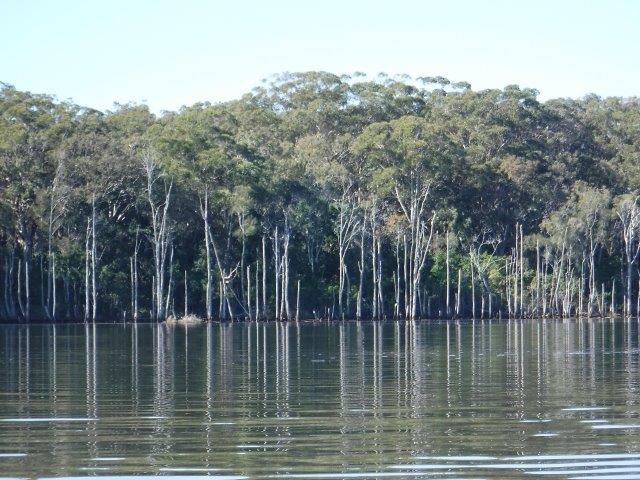
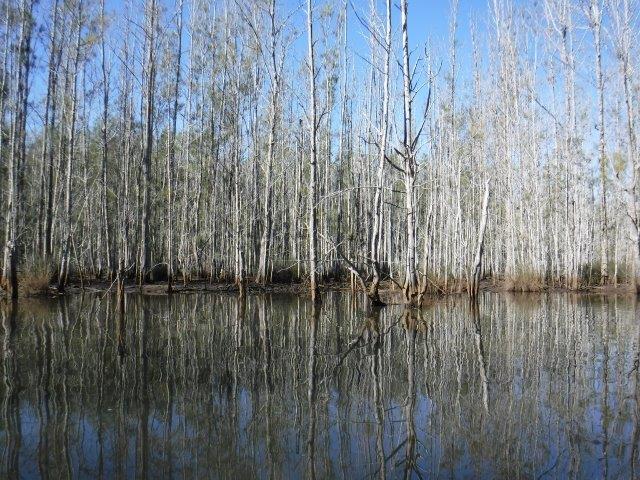
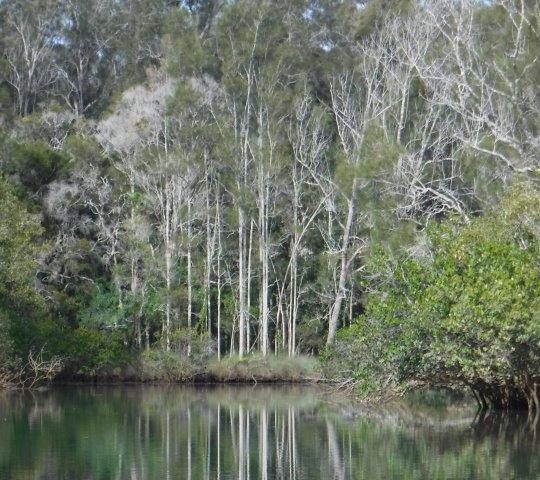
In an attempt to secure good grazing land, this beautiful, timeless area had was drained in the 1970’s. Instead of good land, acid sulphate soils and ‘black water’ poisoned the land and waters downstream (hence the graveyard of trees). After a long process of negotiation by the Yarrahapini Wetlands Reserve Trust, and later the National Parks & Wildlife Service, tidal re-inundation began in 2008 with the creation of an opening in the levee. The tidal flow of saltwater resulted in an immediate reduction in the acid sulphate soils.


***As many of you are aware, Lake Innes suffered from human intervention also. This lake was originally a separate freshwater system, the largest in NSW. In 1933 a drain was excavated to connect the lake with Cathie Creek. This drain subsequently widened and deepened under flood and tidal flows, causing the lake to convert to an estuarine system. The introduction of saline water and tidal variations resulted in extensive biological changes to the biology of the lake, including loss of most of the fresh water habitat. It is now an established estuarine system (Port Macquarie Hastings Council fact sheet).


The Clybucca Historic Site comprises three separate areas totalling 459 hectares. Adjacent to the wetlands is the Golden Hole, a site of national significance registered on the National Estate. It is also referred to as The Clybucca-Stuarts Point midden complex. (Middens basically consist of domestic refuse such as bone and shells etc). It is the largest estuarine midden in the temperate area of Australia and runs almost continuously for 14 kms. The site was an important meeting and sharing place for the GUMBAYNGGIR and DUNGHUTTI nations, a rich source of food and part of a mythological and spiritual landscape with strong cultural significance to the present day Aboriginal people of the mid north coast (NPWS Plan of Management (Clybucca Historic Site). The natural heritage values of the Clybucca Historic Site include littoral rainforest communities, coastal wetlands and estuarine environments. These are estimated to support 135 species of plants and provide habitat for a diversity of fauna species.
Archaeologists have dated Aboriginal occupation of this site at approx.. 4000 years. Research into sea level changes suggest that at the time the midden was occupied, the entire Macleay floodplain was under water and the sea level was 2m higher. The subsequent fall in sea level created the existing coastline and estuaries.


At least 75% of the midden complex still remains and well over 50%, including most of the largest and best preserved mounds, are within the historic site. These middens were generally not used for limekilns, road base or landfill as were many in Limeburners Creek and the Port Macquarie area. The disturbing of some middens by earthworks, well sinking, road cutting and other damaging actions prompted the NPWS to request an archaeological report which concluded that the site was of archaeological significance; this led to its subsequent reservation. (NPWS Plan of Management).


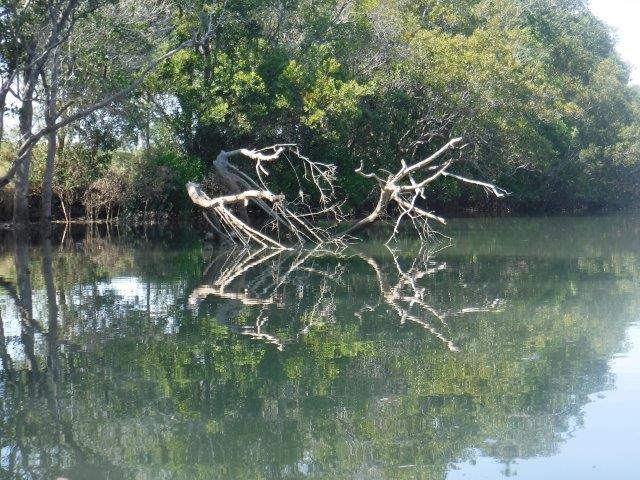
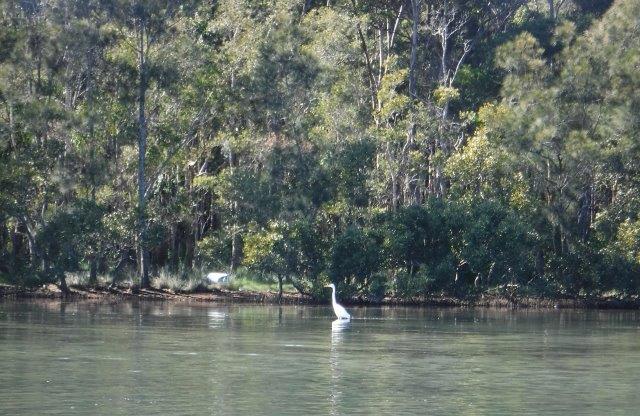
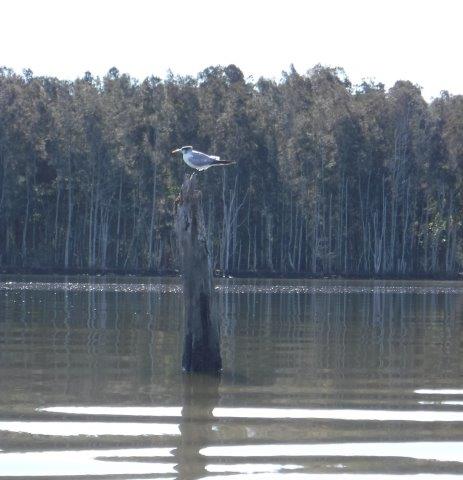
Stephen led us through the opening in the levee, guarded by a group of pelicans. Care needs to be taken as oyster shell encrusted rocks lie dangerously close to the surface as you go through the levee into the ‘Broad-water’ which is the main area where the regeneration of mangroves and fish habitats is most obvious. The wide bay area is flanked by large trees on the side closest to the Golden Hole and there are lovely views to the distant hills. The most striking features are still the outcrops of dead trees that line the banks and form clusters along the way. It was encouraging to see the growth of the mangroves and I spotted three stag ferns, their green leaves standing out against the dull grey of the dead tree trunks. We saw pelicans, osprey, sea eagles, a brahminy kite, ibis, egrets, white faced heron, ducks and a few species I could not identify. The wetlands were full of life: osprey were ferrying large sticks to refurbish their nest ( see photo with the resident keeping an eye on us), birds were fishing and pelicans were preening. It was so uplifiting to see this beautiful area coming back to life and to share it with club members.


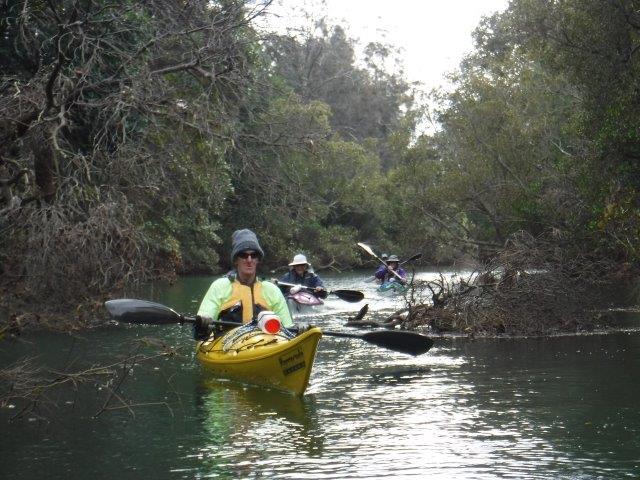
Thanks Greg for leading this trip and Stephen for putting up markers so we did not get lost (which can easily happen in here!!). We meandered around happily for nearly 2 hours being careful to stick together and avoiding dead stumps just below the surface  Bill and Colin enjoyed their longer paddle around Cockle Island and arrived back the same time we did.


Caroline                                   
Blog

Camden Haven River at Kendall


No Comments

 Hi everyone,


Well it was great to get out for a paddle on the lovely water on the Camden Haven River at Kendall last Sunday. Between the flood & its aftermath of floating debris, closed roads and ferries being out I felt like I had not paddled with a group for ages.


Thirteen of us spread across 3 groups enjoyed the sunny conditions, getting back to Kendall before the wind really sprang up (Bill & Colin got some strong gusts while crossing Watson Taylor Lake). Stephen’s group paddled from Kendall to the lake & return, while Bruce’s group paddled to just past the highway bridge & return. After the paddle we had lunch under the verandah of the Kendall boatshed rather than going to the park which sustained damage during the flood.


The Camden Haven is a fascinating area with so much history and the local historical society has compiled some fascinating facts via a timeline for the area. 

On 12 May 1770, Captain Cook sighted three mountains which he called The Three Brothers. Next came John Oxley who crossed the Camden Haven River on 15 October 1818. He named it after Lord Camden, John Jeffreys Pratt, 2nd Earl and First Marquess of Camden, 1759 – 1840. Watson Taylor Lake was named after Camden’s Private Secretary, Watson Taylor. By 1827 soldiers were stationed at Soldiers Point, on the edge of Soldiers Bay on the east side of Watson Taylor Lake. Their purpose was to intercept and escaped convicts from the penal settlement.
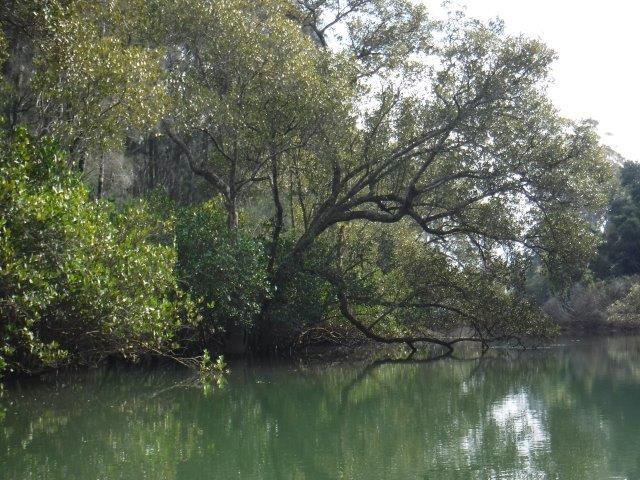
In 1883 the Queens Lake punt started and ran until October 1905 ferrying people and goods across to Limeburners Creek and Bob’s Creek. Against strong protests from the local community, the punt was taken by council to run on the Hastings River. (I have included a photo of an old punt that used to run from Camden Haven to Dunbogan). In 1891 the Village of Camden Haven was renamed Kendall after the poet Henry Kendall who lived there for a period of time. In 1893 the first bridge was opened at Rossglen, or Camden Haven Punt as it was known then. It was described as a hand operated, lifting drawbridge. Punts and other river craft had to whistle for the bridge’s operator, a Mr. Teague, to rush to open it. In 1898 a timber bridge over the river at Kendall was built and by 1915 the railway bridge was opened. The north coast railway line runs for a section alongside the Camden Haven River & it always sounds at odds with the tranquil surroundings paddling down towards the bridge to hear it rumbling along through the trees ( see photo).
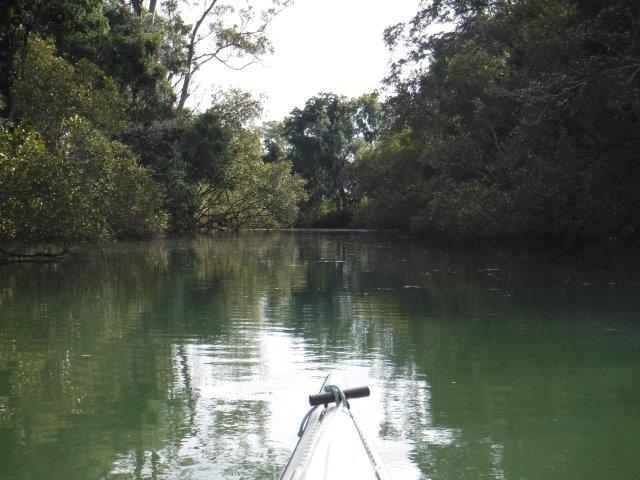

On 19 February 1920, a German mine was found washed up on the beach south of Point Perpendicular, Camden Haven Head. It is thought to have been laid by the German raider ‘Wolf’ as it passed up the Australian coast dropping mines.
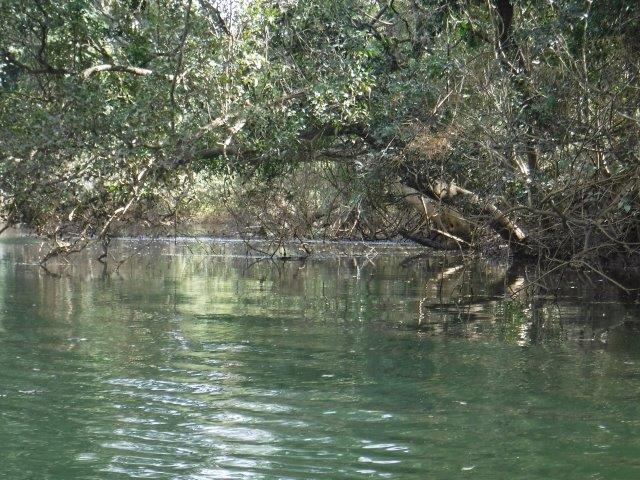

The Camden Haven River starts up on the Great Escarpment & Comboyne Plateau at an elevation of 698m. It flows for 72.4kms through state forests, valleys & through historic townships like Lorne and Kendall. It flows through Watson Taylor Lake and joins with water from Queens Lake and heads to North Haven and Dunbogan, finally entering the ocean at Camden Head.
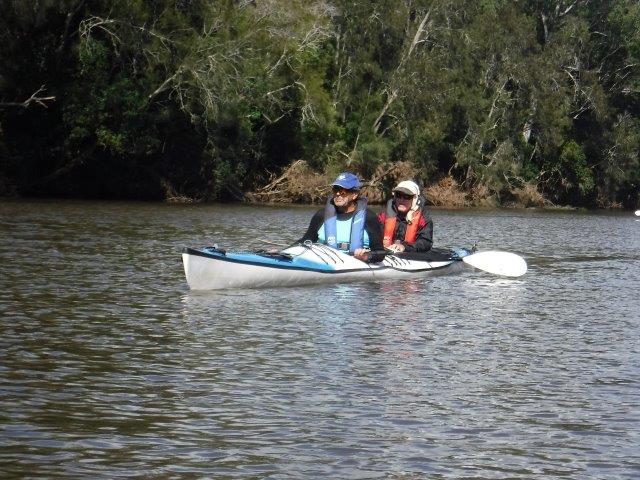

Thanks to our leaders and we hope you enjoyed your paddle.


Well done to those who took on the 20 kms long paddle: Rosemary, Kevin, Bill V, Bruce & Lynne & Stephen.


Cheers
Caroline